

Good rotis begin with atta milled yesterday.
Atulyash is slow-milled on natural stone the day before it reaches your door. Every week, so your atta is never a month old.
- MP Sharbati wheat
- Natural stone chakki
- Chokar kept in

Milk is bought fresh. Why does atta sit for a month?
Atta is on the plate at almost every meal. Yet a big packet can sit in the kitchen for weeks, after it was milled, packed and shipped.
When did you buy the atta in your kitchen?
Tap one to compare.
That is only the time in your kitchen. Most packets do not tell you when the atta was milled.
Before you buy atta, ask what matters.
Bring the packet from your kitchen. Open each question and tick the ones your packet answers.
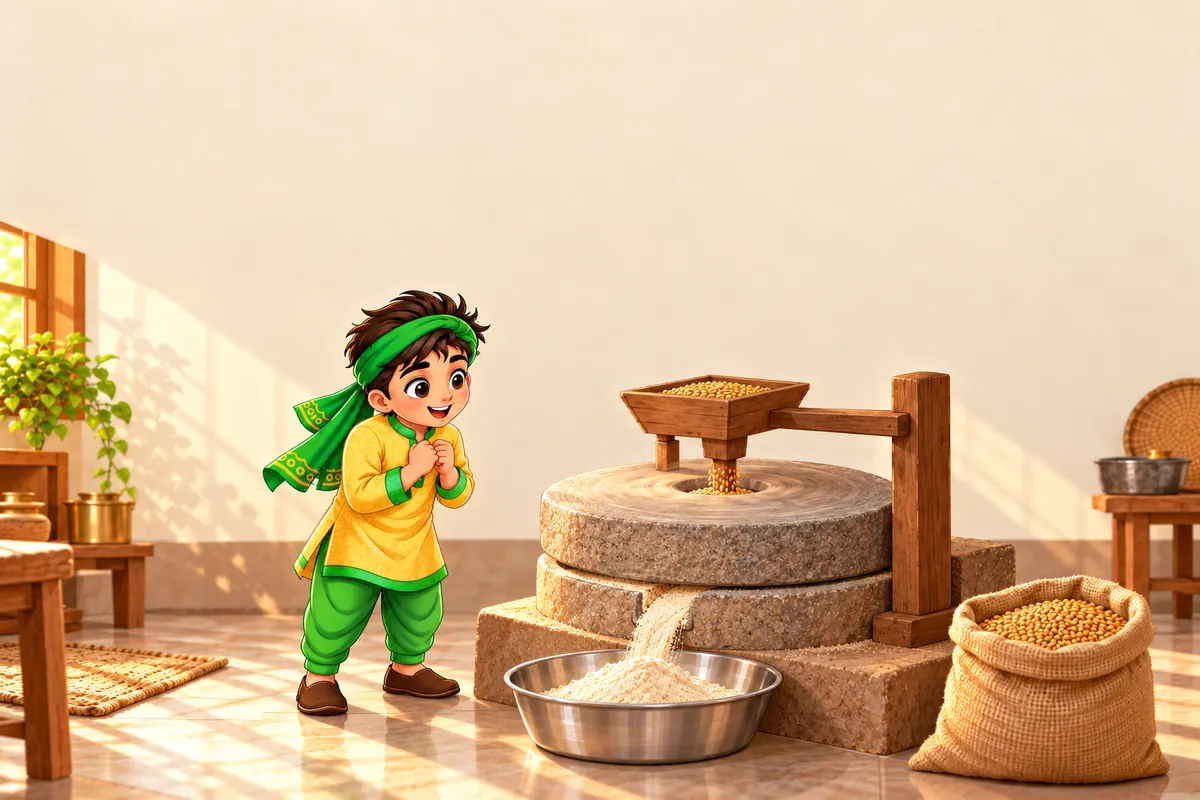
Six decisions. One honest packet.
Every step is chosen to keep the wheat whole and the atta fresh.
- 1
One wheat
Single-origin MP Sharbati. Never blended.
- 2
Cleaned in stages
Multi-stage cleaning, so only grain reaches the stone.
- 3
Natural stone
No emery stone, no steel rollers.
- 4
Milled slowly
Gentle speed keeps heat down.
- 5
Nothing removed
Chokar kept in. Small batches.
- 6
To your door
Milled the day before, delivered next morning.
 Watch the real mill
A different way to think about atta
The real wheat, stone and packing, filmed at our mill. Opens on YouTube.Know what reaches your home
You cannot control everything your family eats. Atta is the one you can.
You will eat outside and depend on food you did not choose. Know the wheat. Know the process. Know what reaches your home.

Foods & nutrition
Dr. Asha Kawatra
35 years in foods and nutrition. Former Professor and Head, Department of Foods & Nutrition, CCS HAU, Hisar.
Her full profile
- Doctorate in Foods & Nutrition.
- Topper through B.Sc., M.Sc. and Ph.D., with two gold medals.
- 35 years of teaching, research and extension work in Foods & Nutrition.
- Former Professor and Head, Department of Foods & Nutrition, CCS HAU, Hisar.
- Former Dean of Postgraduate Studies at CCS HAU, Hisar and MHU, Karnal.
“The foods we eat most often deserve the most attention.” Her work inspires us to question more and treat everyday food with respect.

How much atta does your family need?
Tell us your rotis on a usual day. We will suggest a weekly quantity.
You need about
1.9 kg a week
About 8 kg over 4 weeks
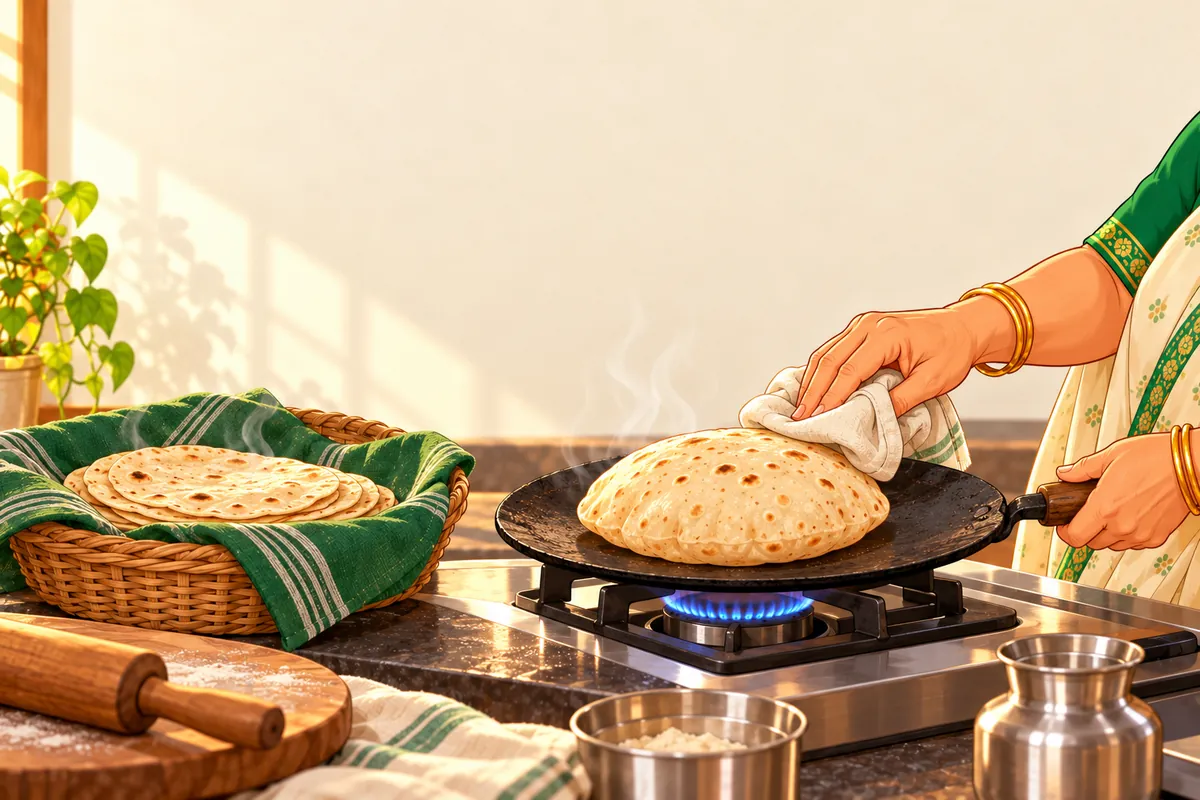
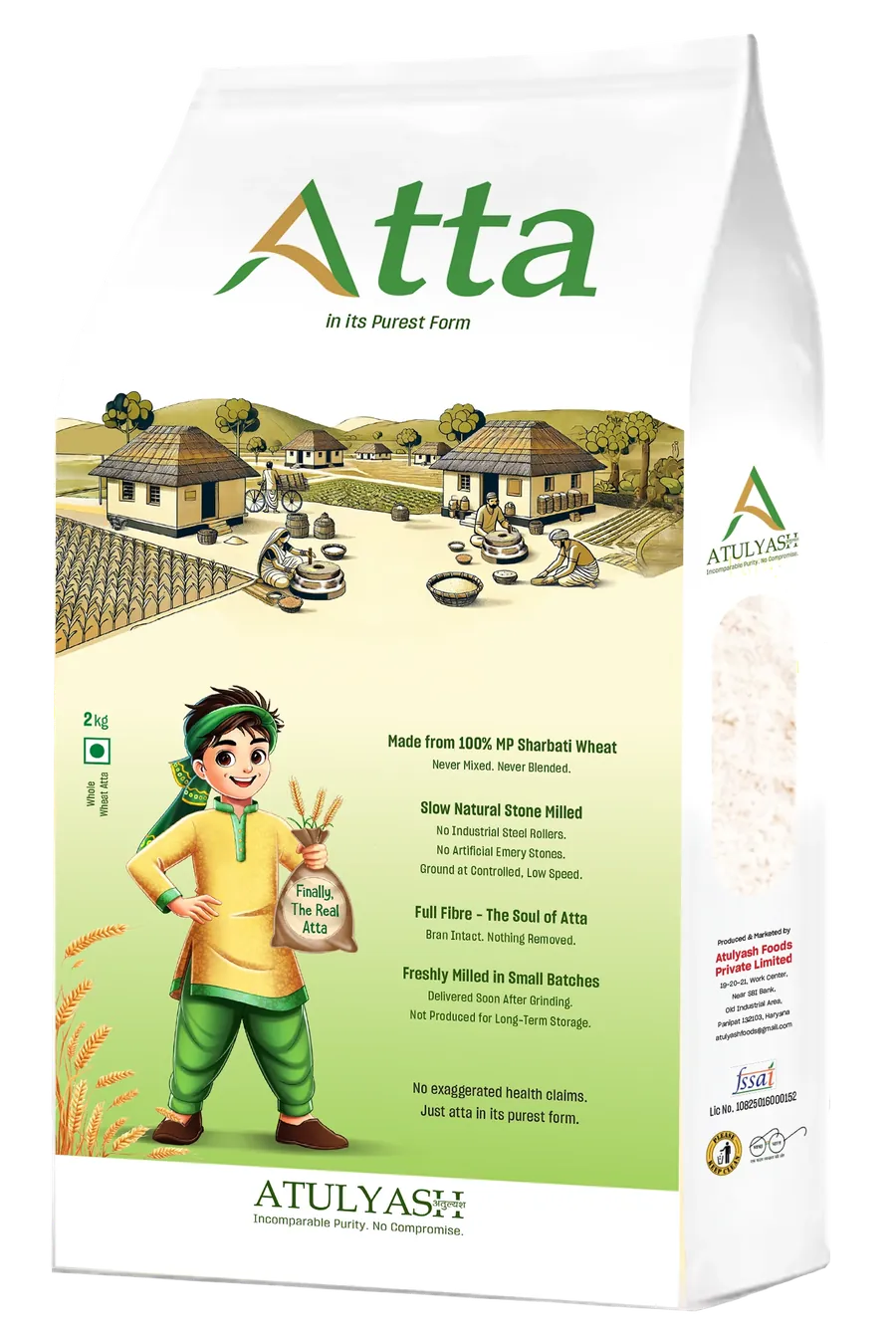
Choose your atta.
Whole wheat atta. 100% MP Sharbati, slow-milled on natural stone, chokar kept in. Nothing added.
How would you like it?Packed in 1 kg and 2 kg packets. Choose the total for each delivery.
₹120 a kg, about ₹3.60 a roti
Free delivery every week. No automatic billing.
Coming soon on Android and iOS
The Atulyash app
Every weekly delivery, in one place.
- PlanSee what is coming.
- AdjustChange an eligible delivery.
- TrackSee when your atta arrives.
Questions before you order

Bring home atta in its purest form.
Milled fresh and delivered every week, so it reaches your table close to when it is eaten.